
Case study
Wrexham: How a Story Becomes a Global Business
Wrexham's story shows how attention can become participation. Follow the revenue, sponsorship opportunities, and limits of a global football narrative.

Key points
- Wrexham offers a useful way to study positive narrative change: a local club becomes meaningful to people who live far beyond its matchday market. The commercial opportunity depends on giving that audience ways to participate. The accounts show value appearing in sponsorship and retail, while a growing cost base sets a separate business challenge.
September 3, 2026 editorial edition; first added to the site October 19, 2026. The opening and secondary illustrations are AI-generated conceptual scenes.
In October 2024, an engineer from Bogotá explained to an Associated Press reporter why he was in a pub in north Wales.
“We came to Wrexham because of the TV documentary”
A person watched a story about somewhere else, acquired a reason to care, and traveled there. His next action was no longer another view.
The club had already said something revealing in its April 2024 advisory-board minutes: it received no direct financial benefit from the documentary. Its value was as a marketing platform for sponsorship and retail. Wrexham's story was creating transactions elsewhere.
Celebrity owners attract attention. A successful television series distributes it. But neither description explains the distance between watching a football club and arranging a journey to its town.
That distance is where a new kind of commercial relationship forms. Someone who had no practical reason to consider the club begins to want a place in its future.
The story makes distance less important
Ryan Reynolds and Rob McElhenney completed their takeover in February 2021. Welcome to Wrexham premiered in August 2022. The club was no longer reaching people only through a fixture list, a league table, or the geography around its ground.
The series' original premise put the people and aspirations of a working-class Welsh town alongside the owners' football experiment. That matters. A viewer does not need to understand the league system before recognizing hope, anxiety, pride, or the fear that a place has been overlooked.
A club supplies an unusually durable story. There is a result next week, a promotion to chase, a player to follow, another season after this one. The outcome is uncertain. The people living with it are real. Viewers can return to discover what happened rather than merely to receive another message from the brand.
The local detail is doing commercial work. Wrexham becomes interesting because it is a particular place with particular stakes. Turn it into a generic success story and much of the reason to care disappears.
That is the first lesson I would draw for other organizations: explanation creates access. Give someone enough context to understand why an outcome matters, and they can begin to take a side even if they arrived knowing very little.
Why a viewer starts to care what happens next
In their 2000 work on narrative transportation, Melanie Green and Timothy Brock studied absorption in stories: attention, imagery, and feeling brought together around a narrative. More transported readers showed stronger story-consistent beliefs and more favorable evaluations of protagonists.
The experiments concern belief and evaluation: the stage at which a story changes someone's relationship to people and events. Purchasing is a further step.
The distinction is visible in three ordinary sentences. “I know who they are” reports awareness. “I care whether they win” reports attachment. “I want to go there” points toward action. A positive sentiment label would treat all three as good news and discard the progression.
Key insight
Aguedelo's visit is one documented example of such a step. The larger question is where a business can make participation possible. For a distant supporter, a shirt can be a way to belong without a seat in the ground. For a sponsor, the same audience can be a reason to enter a market it would never reach through local attendance alone.

The sponsor was buying more than the crowd in the ground
United Airlines makes the distinction unusually clear. In a May 2024 Marketing Dive interview, chief advertising officer Maggie Schmerin described the appeal of appearing within the documentary and the owners' social content. The location of the football team was not the limit of the audience she was buying.
“We don’t fly to Wales, we’ll probably never fly to Wales, but it wasn’t about that.”
In the same month, United announced Wrexham-themed amenity kits and pajamas for selected premium travelers. The partnership was becoming something a passenger could encounter and use, beyond a name on a shirt.
This is why a local attendance figure would have been the wrong starting point for valuing the opportunity. The sponsor was interested in a story already traveling through other people's lives. The football gave it recurring stakes; the series and social distribution gave it reach beyond the ground.
There is a corresponding danger for a sponsor: appearing in a story does not automatically make you part of what people like about it. The integration still has to give the audience a reason to accept the brand's presence. The audience's welcome still has to be earned.
Wrexham's revenue shows where the value appeared
The 2024–25 accounts show £33.335m turnover. Rest of World, outside the UK and Europe, supplied 57.7%, up from 52.1%, mainly driven by North America.
| Measure | 2024 | 2025 |
|---|---|---|
| Turnover | 26.725 | 33.335 |
| Sponsorship / advertising | 13.181 | 17.336 |
| Retail | 4.455 | 5.068 |
| Operating loss | (2.024) | (14.848) |
Sponsorship and advertising supplied approximately 63% of turnover growth; retail supplied about 9%. The larger increment came from commercial partners, not from selling more shirts.
That is an important accounting distinction. The content's value can appear in another line of the business. Evaluating it only by a direct media fee would miss the commercial model the club described.
A content report and a commercial report can therefore each be accurate while missing the most useful connection. One counts views. The other records a sponsorship agreement. The analytical question is whether the audience and its attachment helped make the agreement worth buying. United's explanation supplies a concrete reason to investigate that connection.
Revenue growth is not the same achievement as a profitable club
The operating loss also grew sharply. Staff costs rose from £11.044 million to £19.948 million as playing, operational, and administrative functions expanded. The same year that demonstrates commercial reach demonstrates the expense of building the football operation.

This is not a footnote to the success story. It is part of the story. An audience can make a more ambitious business possible while the cost of that ambition grows faster than revenue.
Sporting progress, celebrity ownership, investment, distribution, and commercial execution developed together. The accounts show the outcome of that combination, not a controlled estimate of what the television series contributed. Wrexham is evidence that a local sports property can acquire a much wider commercial market. It is not a promise that a documentary will pay for a promotion campaign—or that another organization can reproduce the same conditions.
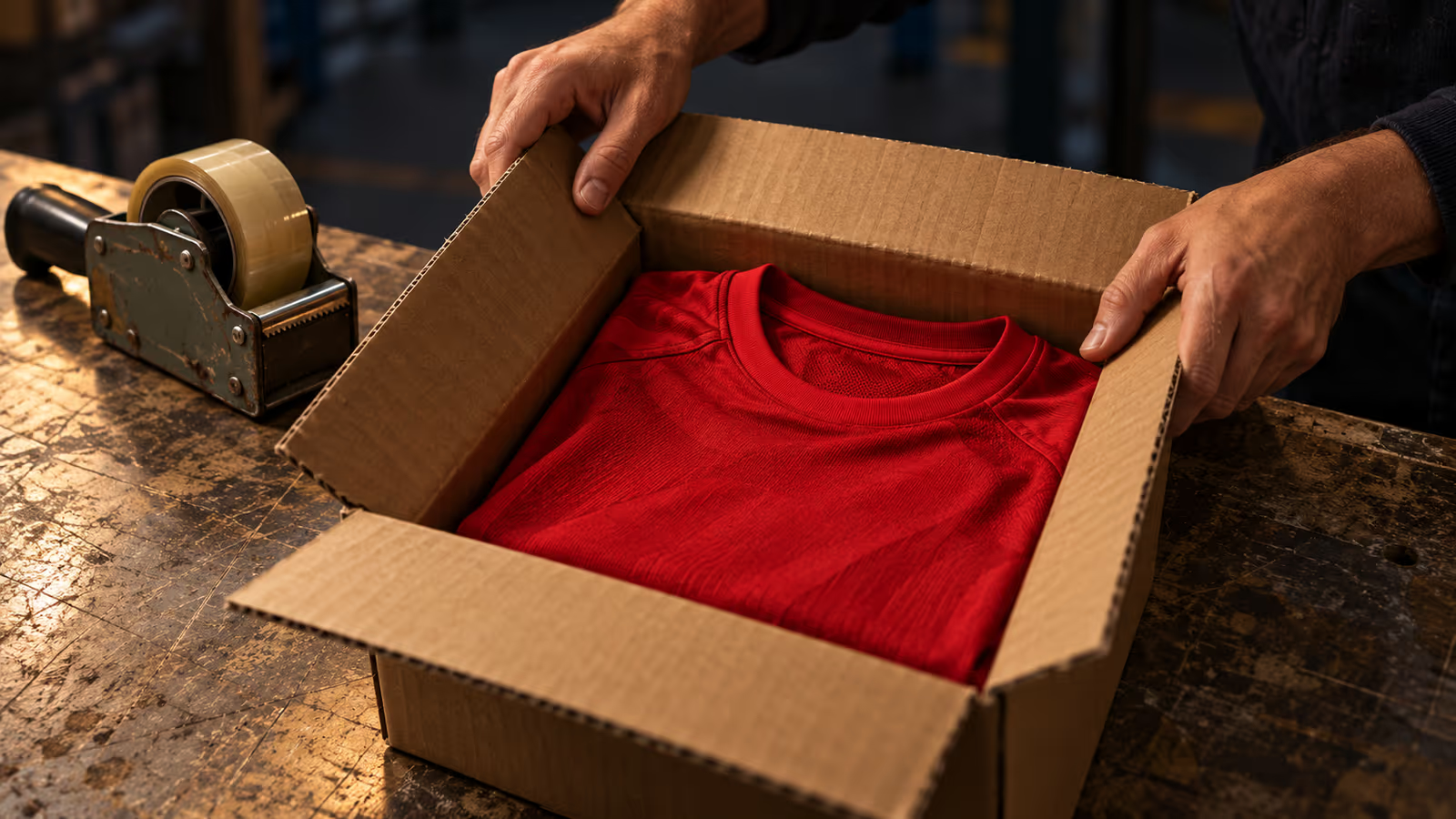
Fulfillment is the less glamorous half of the opportunity. A person who wants a shirt needs it to be available, deliverable, and worth the price. A visitor needs practical access. A sponsor needs a credible offer and someone who can fulfill it. Storytelling creates the invitation; operations determine what happens when someone accepts.
The earlier signal is often a request
The April 2024 minutes had identified where the club expected value to land. In May, United publicly explained why it wanted access to that audience. Both observations were available before the June 2025 year-end: a visible commercial proposition, followed by a sponsor's explanation of why it mattered. An analyst did not need to wait for the accounts to understand the opportunity being pursued.
For a business looking for the next such opening, the most interesting positive conversation may begin with questions: where can I watch, how do I visit, can I buy that here?
Those requests describe a gap between attachment and access. A team monitoring only favorable tone could report the growing enthusiasm and miss the practical demand inside it. A team reading the requests can identify the next obstacle: distribution, stock, language, timing, or a way to join.
This is narrative tracking applied to opportunity. What does the organization now mean to a new audience? What are people trying to do because of that meaning? Which part of the business can make the action possible?
Key insight
The existing community matters just as much. A remote follower and a local supporter may compete for scarce access. If growth makes the people at the center of the story feel displaced, it can damage the particularity that made the story valuable.
For that reason, I would follow new participation alongside the experience of the people already there. Share of voice can tell you the club has become more visible. It cannot tell you whether new visitors feel welcome, local supporters still feel recognized, or a first purchase becomes a lasting relationship.
Wrexham's transferable lesson is not that every business needs a television show. It is that a story can give distant people a reason to care about a very specific place. The commercial opportunity begins when that reason becomes a request to take part. The responsibility begins at exactly the same moment.
Related
editorial ·
When Brand Backlash and Sales Tell Different Stories
American Eagle and Cracker Barrel show why brand backlash needs a commercial interpretation: whose behavior changed, over what period, and at what cost?
glossary ·
Narrative Tracking for Reputation Teams
Narrative tracking watches what kind of story is forming — not how loud it is. It decomposes into three signals that move before volume or sentiment do.
editorial ·
Brand Intelligence: Naming the Discipline
Forrester just admitted the old category name no longer fits. Here's what to call the work that just became tractable — and why nobody has named it yet.
glossary ·
Share of Voice in Reputation Monitoring
Share of voice measures what percentage of category coverage you get vs. competitors. High SOV during a crisis is not a win — ask Volkswagen in 2015.